
Some places make you stop and say, “Wow.” Kumbhalgarh is one of them.
Drive through the green hills of Rajsamand district in Rajasthan, and you will see something strange. A long stone wall is climbing up and down the mountains, like a sleeping snake. At the top of the hill, about 1,100 metres above sea level, stands the fort itself.
Kumbhalgarh sits in the Aravalli range, one of the oldest mountain ranges in the world. Thirteen peaks surround the fort. There are forests, deep valleys and rocky slopes in every direction. From the top, the view is endless. People say that on a very clear day, you can even see the sand dunes of the Thar desert far away.
Who built it, why and how
Kumbhalgarh was built in the 15th century by Rana Kumbha, the great ruler of Mewar. The work took about fifteen years, from around 1443 to 1458. His chief architect was a man called Mandan.
Why did Rana Kumbha build it here? The answer is simple: safety. Mewar had strong neighbours, and wars were common. The king needed a place that enemies could not easily reach. A fort on a high hill, with thick walls and steep paths, was perfect. It also gave people from the area a safe place to go in times of danger.
The fort was very hard to attack. Many armies tried and failed. It fell only after a long fight in 1578, when a big Mughal army, together with other Rajput rulers, took it.
There is also a famous legend about how the wall was built. The story says that the wall kept falling down at night, and the king was worried. A holy man told him that someone must give his life willingly for the wall to stand. One man agreed. After that, the wall rose without any more trouble, and today there are temples at the places connected with this story.
Another story says Rana Kumbha lit giant lamps at the top of the fort. They burned so much ghee and cotton that the valley below stayed bright at night, so farmers could keep working.
What you can see here
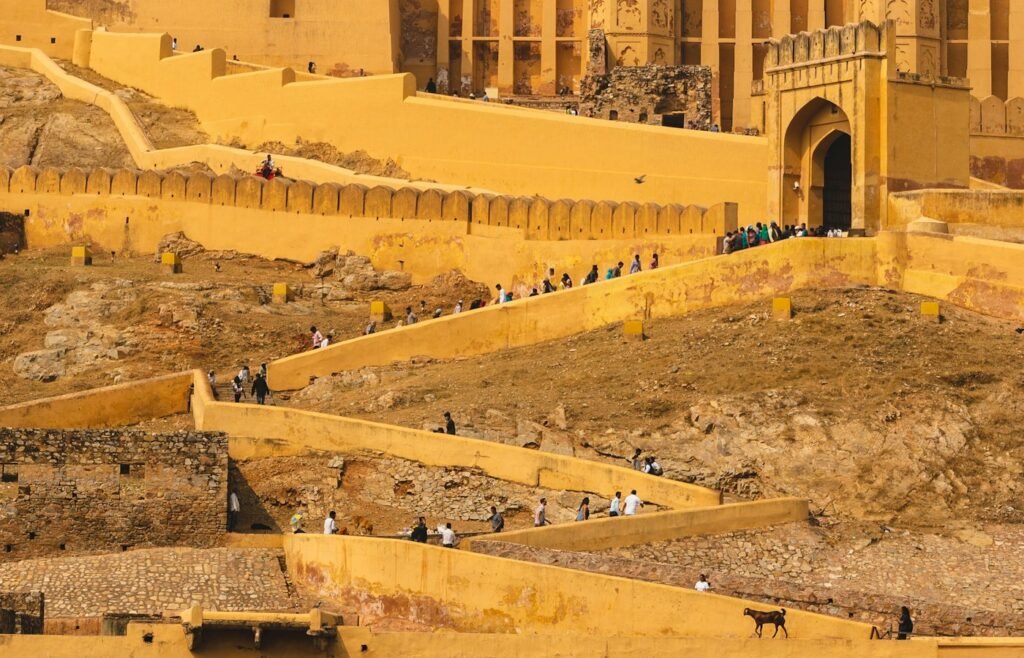
The wall of Kumbhalgarh is the main star. It is about 36 kilometres long and about 15 feet wide. That is wide enough for eight horses to walk side by side.
This is why many people call it the “Great Wall of India.” It is often said to be the second longest continuous wall in the world, after the Great Wall of China. The two walls have many things in common:
- Both follow the shape of the mountains instead of fighting against them.
- Both were built to protect people from enemies.
- Both look amazing when you walk on top and see the wall disappear into the hills.
But there is one big difference. The Great Wall of China crosses thousands of kilometres and many regions. Kumbhalgarh’s wall wraps around one fort, like a stone hug around a mountain top.

Inside the fort, there is a lot to explore:
- Seven huge gates, built so that enemies would struggle to enter.
- More than 300 temples, both Jain and Hindu, hidden between the walls and trees.
- Badal Mahal, the “Palace of Clouds,” at the very top. On misty days, the clouds really do float around it.
- A small palace where Maharana Pratap was born. He is one of the most loved heroes of Rajasthan.
In the evening, the fort is lit up with lights, and it glows against the dark hills. In 2013, Kumbhalgarh became a UNESCO World Heritage Site, together with other hill forts of Rajasthan.
People, clothes and food
The villages around Kumbhalgarh are part of old Mewar. The people are proud of their Rajput history, and they are also warm and friendly to visitors. Do not be surprised if someone invites you for a cup of chai.
The clothes here are full of colour. Men often wear a bright turban called a safa or pagri, with a long kurta or an angrakha. Women wear wide skirts called ghagras, with colourful scarves and many bangles. Bright red, yellow, orange and pink look beautiful against the brown hills.
Food is a big part of the experience. Try these:
- Dal baati churma: hard, round wheat bread with spicy dal and a sweet crumbled dessert, all with lots of ghee.
- Gatte ki sabzi: gram flour dumplings in a spicy yogurt curry.
- Ker sangri: a desert dish made from dried beans and berries.
- Bajra roti: a simple flatbread made from millet, often eaten with garlic chutney.

Many places serve pure vegetarian food, and non-vegetarian dishes like laal maas are also part of Rajasthani cooking. In winter, the area also holds the Kumbhalgarh Festival, with folk music, dance and puppet shows.
The wild side
Kumbhalgarh is not only about history. The fort is surrounded by the Kumbhalgarh Wildlife Sanctuary, a large forest area full of life.
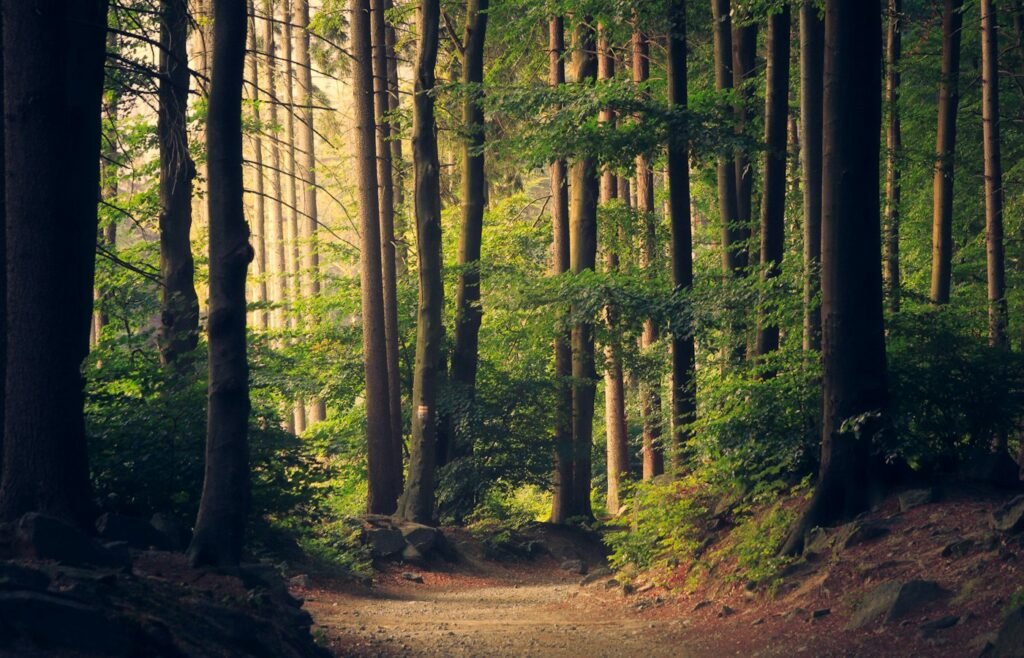
With some luck, you may see leopards, sloth bears, hyenas, jackals and wild boars. The sanctuary is also well known for its wolves. Deer and antelope are easier to spot. Look for sambar, nilgai and the rare four-horned antelope called chausingha.
Bird lovers will be happy too. Many species live here, including parakeets, spurfowl and the grey junglefowl. Jeep safaris and nature walks are the best ways to explore. Go early in the morning or near sunset, when animals are most active.
The best time to visit
October to March is the best time. The weather is cool and pleasant, and walking along the wall is a joy. December and January can be cold in the morning, so bring a light jacket.
July to September, the monsoon season, is also special. The hills turn deep green and the fort is wrapped in mist. But the stones can be slippery, so walk carefully.
April to June is very hot. If you must go then, visit early in the morning.
A small tip: wear comfortable shoes, carry water, and give yourself at least half a day. The fort is big, and you will not want to rush.
A fort that never really sleeps
Stand on the top of Badal Mahal as the sun goes down. The sky turns gold, then red. The wall glows like a river of fire across the hills. Somewhere far below, a village lamp flickers on, just like it did six hundred years ago.
Kumbhalgarh is not just stone and mortar. It is a promise made by a king, a wall built with courage, and a hill that refused to bow to any army. Empires rose and fell around it. Kings were born and died. And still the fort stands, high above the clouds, as proud as ever.
Come and walk on its wall. Listen to the wind. You will feel that the fort is quietly telling you its stories, and when you leave, a small part of you will stay behind with Kumbhalgarh, the fort that touches the clouds.